
Positive Cash Flow Properties: Where They Still Exist in Canada

Table of Contents
Listen to this Article
Listen to the complete guide while you continue reading.
Ask any landlord who bought a condo or a rental house in the last few years, and many will admit the same quiet truth: the property loses money every month. Rent comes in, the mortgage and expenses go out, and the owner tops up the difference — betting the whole thing on future appreciation.
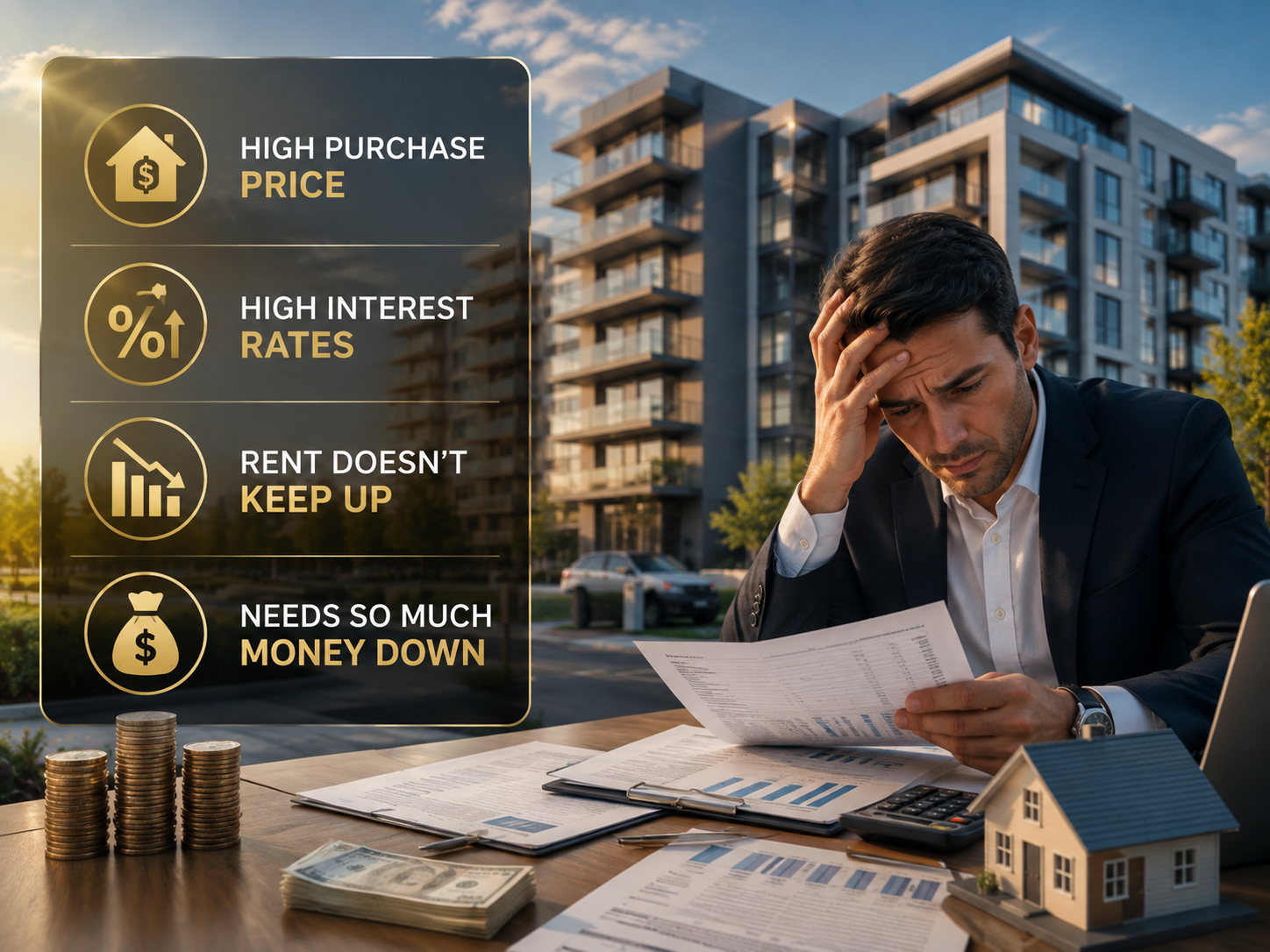
That’s negative cash flow, and it’s the reality for a large share of Canadian residential rentals right now. High purchase prices and elevated interest rates have squeezed the margin out of the traditional buy-a-house-and-rent-it model.
So the question serious investors are asking has changed. It’s no longer “will this go up in value?” It’s “will this pay me while I hold it?” Here’s where positive cash flow properties still exist — and why.
Why so many properties bleed money
A single rental condo or house has one income stream and a big mortgage against it. When prices climbed faster than rents, the math tipped. A typical condo might rent for far less than the monthly cost to own it.
There’s also no economy of scale. One furnace, one roof, one tenant, one vacancy that wipes out 100% of the income the moment they leave. The whole model is fragile, and today’s numbers expose that fragility.
Appreciation can still make it work eventually. But “eventually” doesn’t pay the mortgage this month, and it isn’t guaranteed.
What makes a property actually cash flow
Positive cash flow comes down to three levers: more income streams, lower financing cost per door, and a longer runway to repay. Commercial multi-family real estate can pull all three.
- Multiple units, multiple rents. Eight tenants in one building means eight income streams. One vacancy is a dent, not a disaster.
- Better financing terms. Buildings with five or more units are financed as commercial real estate, and when insured through a program like CMHC MLI Select, they can access longer amortization and lower premiums than any single-family mortgage.
- A longer amortization. Spreading payments over a longer period lowers the monthly payment, so the rent covers the debt with room left over.
Stack those together and you get what a single condo almost never delivers today: rent that exceeds the full cost of owning, from the first month.
The role of longer amortization
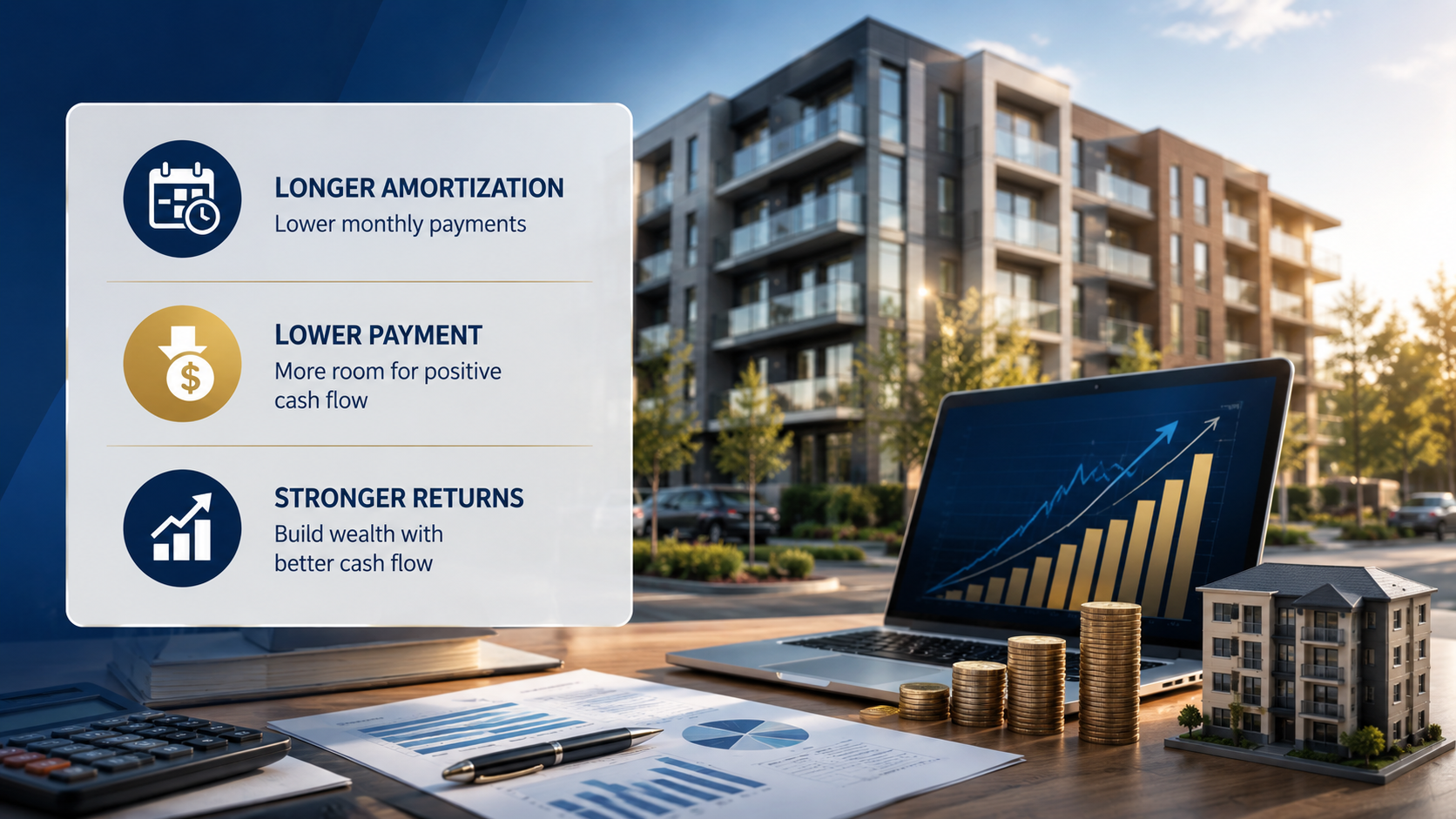
This is the lever most residential investors have never had access to. A conventional mortgage stretches over 25 or 30 years. A qualifying multi-residential building can stretch much longer — which meaningfully reduces the monthly payment.
Lower payment, same rent, means the gap becomes positive. It’s not magic; it’s structure. (We break down how this works in [is a 50-year amortization really possible?].)
"Cash flow" only counts after the real expenses
Here’s the honest part most listings skip. A property isn’t truly cash-flow positive if the “profit” ignores the costs of running it.
Real positive cash flow is what’s left after property management, a vacancy allowance, property taxes, insurance, and routine maintenance are all paid. A number that ignores those isn’t cash flow — it’s a fantasy.
When you look at a building, make sure the projected cash flow already subtracts those items. The strongest multi-family deals still show a positive figure after all of it. That’s the number that matters.
Where these properties are easiest to find
Positive cash flow is easier in markets where purchase prices are reasonable relative to rents. That’s why affordable, growing markets — rather than the most expensive big cities — tend to produce the best cash-flowing multi-family deals in Canada today. (Edmonton is a strong current example; more in [why Edmonton leads for CMHC real estate].)
New, purpose-built rental buildings in those markets, financed with the right structure, are where positive cash flow still lives.

See the real number
The only way to know if a property truly cash flows is to run it. Every project we represent comes with a one-page investor proforma that shows the income, subtracts the real operating costs, and gives you the actual monthly and annual cash flow after debt.
Want to see a property that cash flows from day one? Call Janak Singh Chhabra at (647) 999-0935 or request a proforma through the contact page.
No fee. No pressure. Just a conversation.
Frequently Asked Questions About MLI Select Rates
What is a positive cash flow property?
It’s a rental property where the income exceeds all costs of ownership — mortgage, management, vacancy, taxes, insurance, and maintenance — leaving money in your pocket each month.
Why do so many Canadian rentals have negative cash flow?
High purchase prices combined with elevated interest rates mean a single condo or house often rents for less than it costs to own, so the owner covers the shortfall and relies on appreciation.
How do commercial multi-family properties achieve positive cash flow?
Multiple rental units spread the risk, and commercial financing through programs like CMHC MLI Select allows longer amortization and better terms, lowering the payment relative to the rent.
How do I know a property's cash flow is real?
Make sure the projected figure subtracts property management, vacancy, taxes, insurance, and maintenance. A proforma that skips these overstates the true cash flow.

Janak Singh Chhabra
A licensed Realtor at TFN Realty Inc., Brokerage – and one of the few specialists in Canada who works exclusively at the intersection of pre-construction real estate and CMHC MLI Select multi-unit investments. Janak is a two-time Diamond Award winner at Bay Street Group — one of the most recognized performance awards in Canadian real estate — for 2023 and 2024. The Diamond Award is given to top-performing realtors who demonstrate exceptional results across transaction volume, client satisfaction and professional excellence.
Janak Singh Chhabra is a licensed real estate representative, not a mortgage broker or financial advisor. Market data and project figures are drawn from public sources and are subject to change. All investment figures are estimates for illustration. Buyers should verify financing with a qualified mortgage professional and complete independent due diligence before purchasing. E.&O.E.